
Green Fodder vs Dry Fodder
Key Differences, Uses & Storage
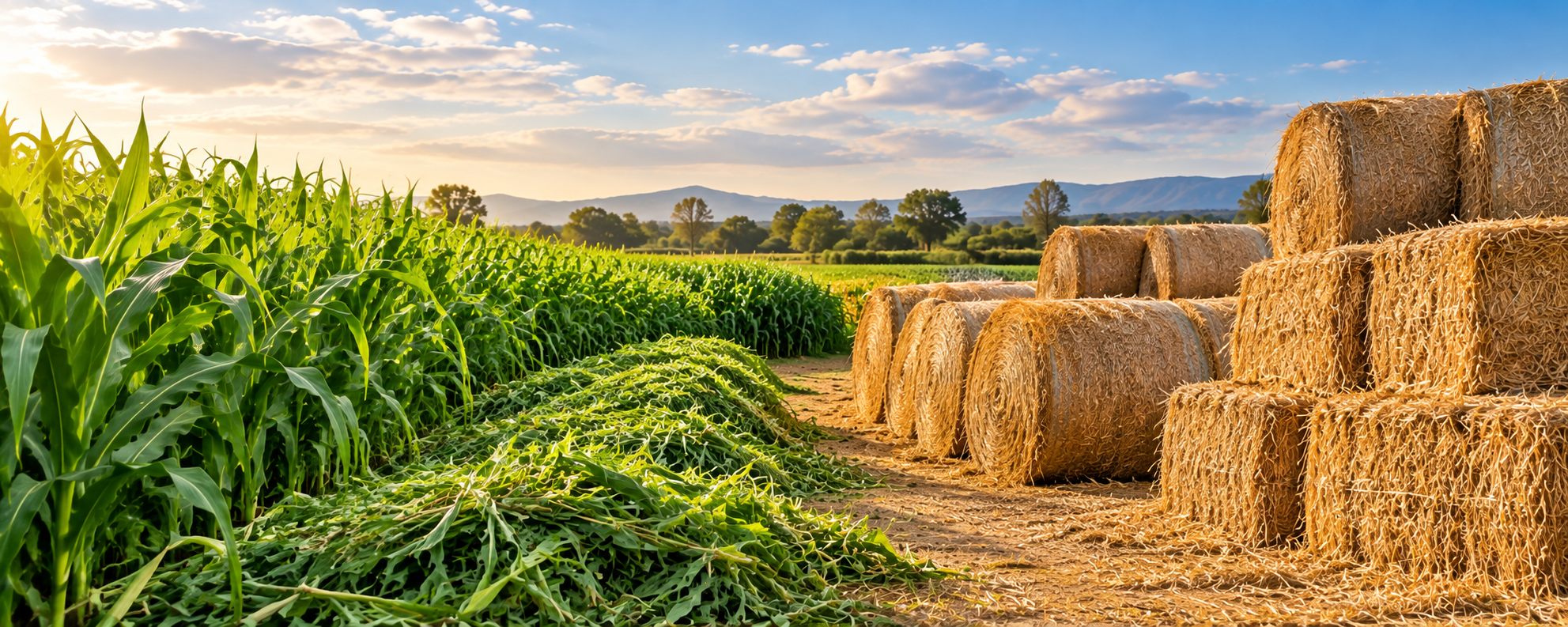
Green fodder and dry fodder are two common categories of plant-based materials used in livestock feeding. While green fodder consists of freshly harvested crops, dry fodder includes materials prepared through drying for storage and later use.
Understanding their differences helps farmers plan feeding requirements, manage seasonal availability, and choose suitable materials according to their farm conditions.
1. What Is Green Fodder?
Green fodder consists of fresh plant materials harvested for use in livestock feeding. Common examples include Green Napier, Green Maize, and Green Sorghum.
Its availability depends on crop growth, weather conditions, harvesting schedules, and seasonal factors. Since fresh fodder can deteriorate if handled poorly, timely transportation and appropriate storage are important.
2. What Is Dry Fodder?
Dry fodder includes plant materials that have been dried or collected after crop harvesting. Examples include Alfalfa Hay, Sorghum Hay, Peanut Hay, Wheat Straw, and Rice Straw.
These materials differ according to their crop origin, physical structure, and preparation method. Proper drying and protection from moisture help maintain their condition during storage.
3. Key Differences Between Green & Dry Fodder
Moisture Content: Green fodder naturally contains more moisture, while dry fodder has undergone drying or is collected in a dry form.
Storage Requirements: Fresh fodder generally requires timely use and careful handling. Dry fodder can be stored for longer periods when properly prepared and protected from moisture.
Seasonal Availability: Green fodder production often depends on growing conditions and harvest cycles. Dry fodder can help farms maintain stocks beyond the immediate harvesting period.
Transportation & Handling: Fresh fodder may require quicker movement from the field to its destination, whereas dry fodder is often available in loose or baled forms suitable for storage and transport.
4. How to Choose Between Green & Dry Fodder
The choice depends on the feeding system, livestock requirements, seasonal availability, and storage facilities.
Farms with access to freshly harvested crops may incorporate green fodder into their feeding routines. Where storage and longer-term planning are important, suitable dry fodder materials may offer greater flexibility.
The condition of the product, transportation arrangements, and compatibility with the complete feeding programme should also be considered. Neither category is automatically suitable for every animal or situation.
5. Proper Handling & Storage
Green fodder should be handled promptly and protected from conditions that accelerate deterioration. Avoid unnecessary delays between harvesting and use.
Dry fodder should be stored in a clean, covered, and well-ventilated area. Protect it from rain, ground moisture, and contamination, and inspect stored materials regularly for signs of mould or spoilage.
Good handling practices help preserve product condition and reduce avoidable losses.
Conclusion
Green and dry fodder serve different purposes in livestock feeding and farm management. Green fodder offers fresh crop material, while dry fodder provides options that can be stored for later use when properly prepared and maintained.
Understanding their characteristics, availability, and storage requirements helps farmers make informed decisions and plan their fodder resources more effectively.