
Choosing the Right Fodder for Livestock
Types, Uses & Key Considerations
Choosing the right fodder is an important part of livestock management. Different animals have different feeding requirements, and the suitability of a fodder material depends on its characteristics, the animal’s needs, and the overall feeding programme.
From green fodder and dry hay to silage and crop-based materials, understanding the available options helps farmers make informed decisions about feeding, storage, and seasonal planning.
1. Understanding Different Fodder Requirements
Livestock feeding requirements vary according to animal species, age, production stage, activity, and management practices. Forage selection should therefore consider the intended animal and how the material fits into its complete diet.
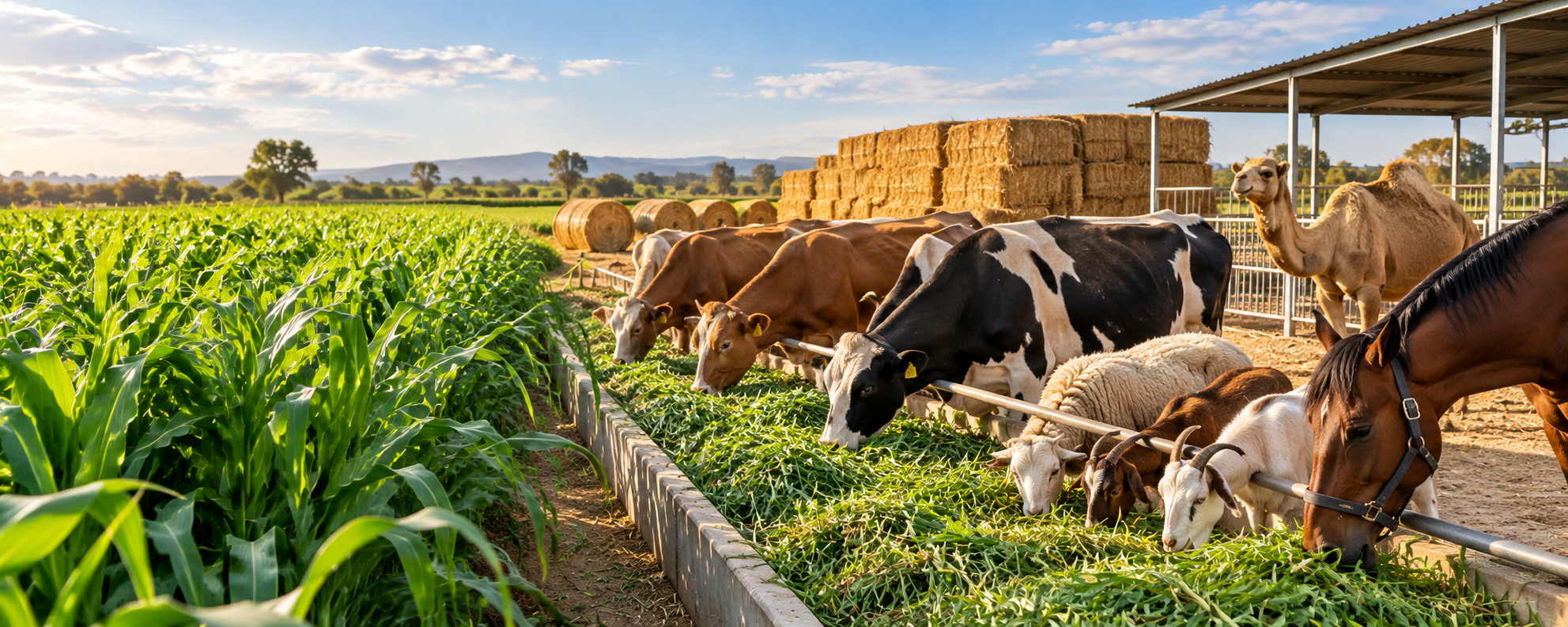
Cattle, goats, sheep, horses, and camels may use different forage options depending on their individual requirements and established feeding practices. No single fodder type is automatically suitable for every animal or feeding situation.
2. Common Types of Fodder
Different fodder categories offer a range of characteristics and practical applications.
-
-
-
Green Fodder: Green Napier, Green Maize, and Green Sorghum are fresh crop materials used in various livestock feeding systems.
-
Dry Hay: Alfalfa Hay, Sorghum Hay, Oat Hay, and Peanut Hay are examples of dried forage materials.
-
Silage: Corn Silage is produced by preserving suitable green crops through fermentation and requires appropriate storage.
-
Straw: Wheat Straw, Rice Straw, and Chickpea Straw are crop-derived materials with distinct physical characteristics and uses.
-
-
Understanding the differences between these categories helps farmers select materials according to their feeding practices and operational needs.
3. Factors to Consider When Selecting Fodder
Several practical factors should be evaluated before choosing a fodder product.
Animal Requirements: Consider the animal species, age, production stage, and overall nutritional needs. Appropriate feeding guidance can help determine how a particular material should be included in the diet.
Product Condition: Examine the material for cleanliness, natural appearance, and signs of spoilage or contamination. Proper harvesting, handling, and storage can influence its condition.
Availability: Seasonal changes can affect the availability of fresh fodder and particular dry forage crops. Planning ahead can help farms manage changing requirements.
Handling & Storage: Consider the product’s physical form, transportation requirements, and the storage facilities available at the farm.
4. Green Fodder vs Dry Fodder
Green and dry fodder differ in their preparation, storage, and handling requirements.
Green fodder consists of freshly harvested crops and generally requires timely transportation and use. Its availability may depend on crop growth, season, and local harvesting conditions.
Dry fodder, including hay and straw, can be stored for later use when properly prepared and protected from moisture. Storage conditions, ventilation, and regular inspection are important for maintaining its condition.
The choice between green and dry materials depends on farm resources, seasonal availability, feeding practices, and the intended use of the product.
5. Common Mistakes in Fodder Selection
Selecting fodder based only on price or availability can overlook important considerations. Farmers should also assess product condition, suitability for the intended animal, and compatibility with the complete feeding programme.
Other common challenges include inadequate storage, purchasing materials without checking their condition, and failing to plan for seasonal changes. Careful inspection, suitable storage arrangements, and appropriate feeding advice can help reduce these problems.
Conclusion
Choosing the right fodder involves understanding animal requirements, available product types, seasonal conditions, and proper handling practices. Green fodder, hay, silage, and straw each have different characteristics and should be evaluated according to their intended applications.
By considering these factors together, farmers can make more informed fodder choices and manage their livestock feeding resources more effectively.