
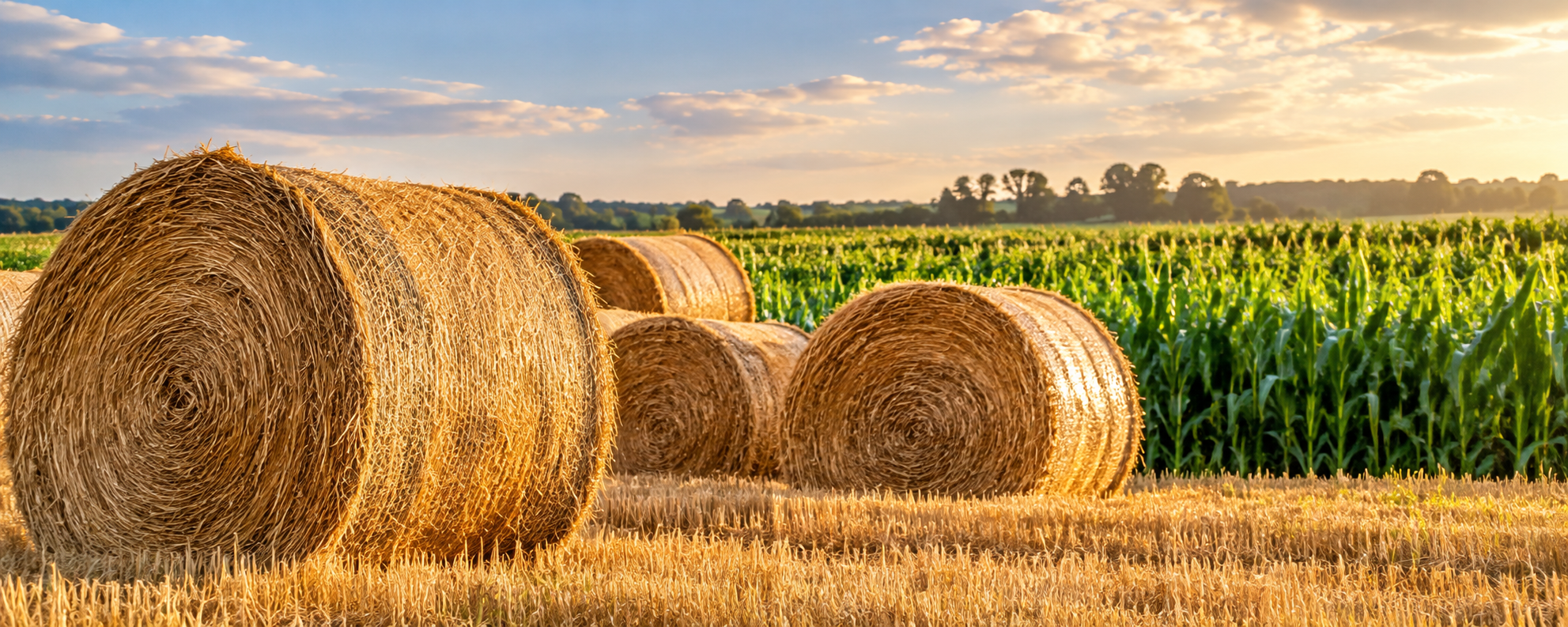
Understanding Hay & Forage
Types, Uses & Importance
Hay and forage are important components of livestock feeding systems, providing a variety of plant-based materials for different farming requirements. From dried grasses and legume hay to fresh green fodder and silage, each type has its own characteristics, preparation methods, and applications.
Understanding these differences helps farmers make informed decisions about fodder selection, storage, and seasonal planning.
1. What Are Hay & Forage?
Forage refers to plant materials used in livestock feeding, including grasses, legumes, and other suitable crops. Hay is produced by harvesting and drying forage plants for storage and later use.
Common varieties include Alfalfa Hay, Sorghum Hay, Oat Hay, Timothy Hay, Peanut Hay, and Millet Hay. Green fodder and silage are also important forage categories, although they are prepared and preserved differently from hay.
2. Different Types of Fodder
Fodder is available in several forms, depending on the crop and preparation method.
-
-
-
Hay: Dried forage such as Alfalfa Hay, Oat Hay, and Sorghum Hay.
-
Green Fodder: Fresh crops such as Green Napier, Green Maize, and Green Sorghum.
-
Silage: Green crops preserved through fermentation, including Corn Silage.
-
Straw: Crop residues such as Wheat Straw, Rice Straw, and Chickpea Straw.
-
-
Each category has distinct physical characteristics and handling requirements.
3. Choosing the Right Forage
Forage selection depends on the intended animal, feeding system, product condition, and availability. Different livestock species, including cattle, goats, sheep, horses, and camels, may have different feeding requirements.
Buyers should consider crop type, cleanliness, physical condition, bale format, and storage needs. Forage should be selected as part of an appropriate feeding programme.
4. Proper Storage & Handling
Proper storage helps maintain the condition of hay and other dry fodder materials. Hay should be protected from rain, ground moisture, and damp conditions, with suitable ventilation around stored materials.
Regular inspection can help identify mould, unusual odours, or contamination. Green fodder and silage require handling and storage methods suited to their fresh or preserved form.
5. Common Challenges in Forage Management
Seasonal availability, inconsistent product condition, transportation, and limited storage space can create challenges for farmers and fodder buyers.
Planning purchases in advance, checking product quality, and arranging suitable storage can help reduce avoidable losses. Understanding crop characteristics also helps buyers choose materials that match their operational requirements.
Conclusion
Hay and forage include a wide range of materials, from dried grasses and legume hay to green fodder, silage, and crop residues. Understanding their differences helps farmers make better-informed decisions about product selection, handling, and storage throughout the year.