
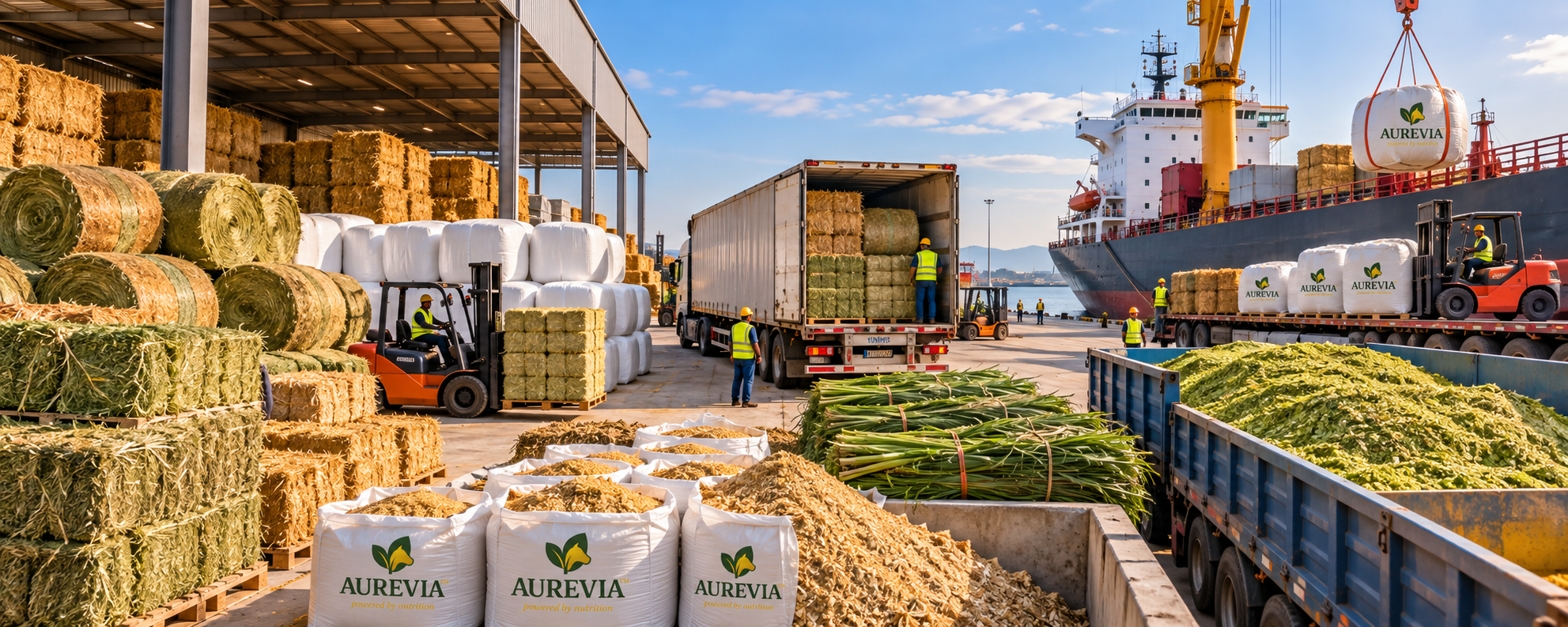
Fodder Storage, Handling & Transportation
Best Practices for Maintaining Quality
Proper fodder storage, handling, and transportation are essential for maintaining product condition and reducing avoidable losses. Hay, green fodder, silage, and straw each have different requirements depending on their physical form, moisture condition, and intended use.
From storage at the farm to delivery by road or water, careful planning helps protect fodder from moisture, contamination, physical damage, and unsuitable handling conditions.
1. Why Proper Fodder Storage Matters
Fodder can deteriorate when exposed to excess moisture, unsuitable storage conditions, contamination, or poor handling. These problems may affect its appearance, usability, and overall condition.
Suitable storage arrangements help protect fodder from weather exposure and make inspection, movement, and stock management easier.
2. Storing Different Types of Fodder
Different fodder categories require different storage approaches.
-
-
-
Dry Hay: Keep in a covered, dry, well-ventilated area and protect it from rain and ground moisture.
-
Straw: Store bales or loose material away from damp surfaces and inspect for contamination.
-
Green Fodder: Plan harvesting, transportation, and use carefully to Minimize delays and deterioration.
-
Silage: Maintain effective seals and protect stored material from air entry and water damage.
-
-
Storage methods should suit the specific material and local conditions.
3. Transportation by Road
Road transportation is commonly used to move fodder from farms and storage locations to its destination. Appropriate vehicle selection and loading practices help protect the material during transit.
-
-
-
Use Suitable Vehicles: Choose vehicles with adequate capacity and clean, suitable loading areas.
-
Protect from Weather: Use appropriate covers to protect dry fodder from rain and road spray while allowing suitable ventilation where necessary.
-
Secure the Load: Stack and secure bales properly to prevent shifting, falling, or damage during transit.
-
Prevent Contamination: Keep fodder away from chemicals, fuels, waste, and other materials that could contaminate it.
-
Plan the Route: Consider journey duration, road conditions, loading arrangements, and unloading facilities.
-
Handle Green Fodder Carefully: Minimize unnecessary delays and arrange timely delivery to reduce deterioration.
-
-
4. Transportation by Water
Water transportation can be used for bulk fodder shipments, particularly when materials are moved in containers or cargo vessels. Protection from moisture and careful cargo planning are especially important.
Keep Cargo Dry: Dry hay and straw should be protected from rain, seawater, leaks, and damp cargo surfaces. Use suitable covered or enclosed cargo spaces.
Check Containers & Cargo Areas: Before loading, inspect containers or holds for cleanliness, water ingress, residual Odors, and damage that could affect the fodder.
Manage Moisture & Condensation: Temperature changes during transit can cause condensation. Appropriate cargo preparation, moisture protection, and ventilation where suitable can help reduce moisture-related damage.
Secure the Cargo: Arrange and secure bales or packaged materials to limit movement during loading, unloading, and transit.
Protect Packaging: Inspect wrapping, bags, and other packaging for tears or damage, and ensure cargo is handled appropriately at ports and transfer points.
Inspect on Arrival: Check for wet patches, damaged packaging, contamination, unusual Odors, or visible Mold before accepting or using the material.
5. Common Handling & Transportation Mistakes
Leaving fodder uncovered during rain, loading onto dirty vehicles, storing bales directly on damp surfaces, and failing to secure cargo can compromise product condition.
For silage, damaged wrapping or poor sealing can allow air to enter and contribute to spoilage. Green fodder may deteriorate when harvesting, loading, and delivery are not properly coordinated.
Regular inspections and suitable handling procedures help reduce these risks.
6. Planning Fodder Supplies
Effective planning begins before the material is loaded. Buyers and suppliers should consider product quantity, packaging, vehicle or cargo capacity, delivery schedules, storage space, and unloading arrangements.
Keeping products clearly identified and documenting their condition at dispatch and receipt can help improve stock management and identify handling issues during transit.
Conclusion
Proper storage, handling, and transportation help maintain fodder condition from collection to delivery. Whether materials are moved by road or water, protection from moisture, contamination, physical damage, and unsuitable storage conditions is essential.
Careful planning, secure loading, appropriate packaging, and inspection at delivery help farmers, traders, and bulk buyers manage fodder supplies more effectively.