
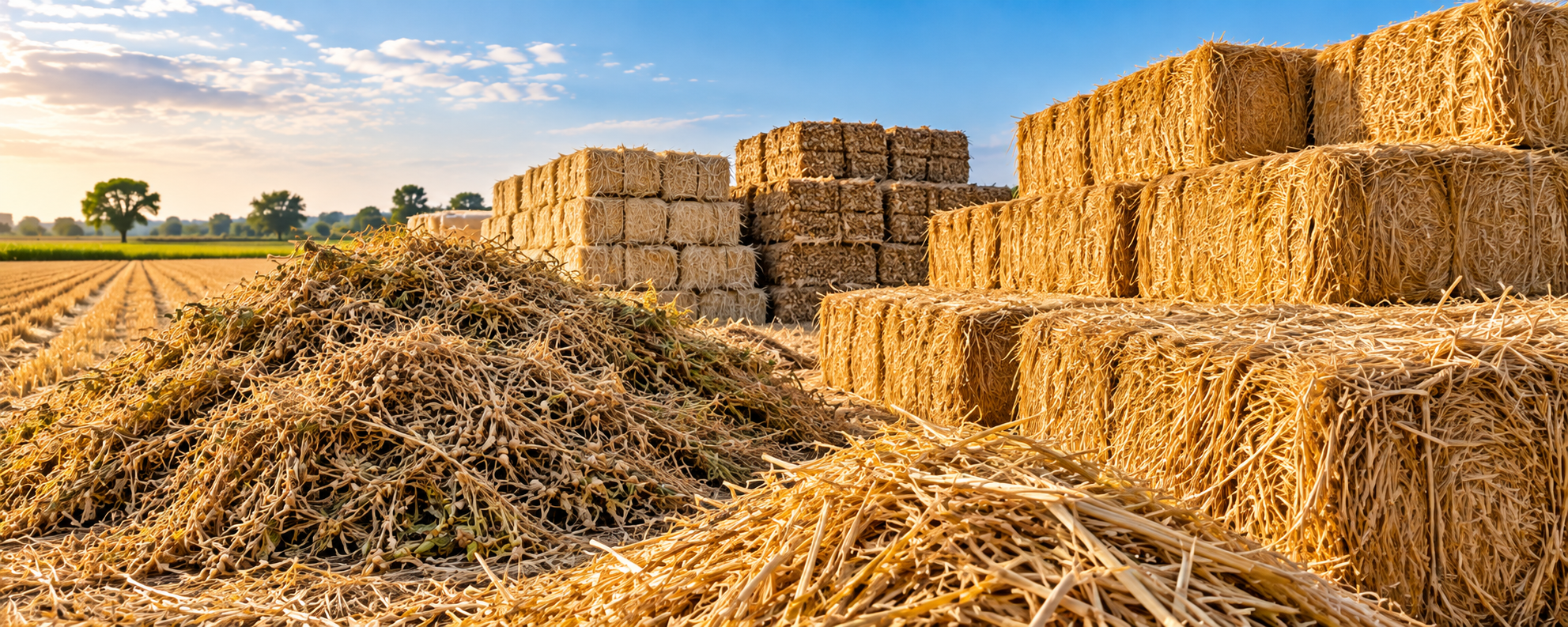
Understanding Straw & Crop Residues
Types, Uses & Handling
Straw and crop residues are agricultural materials left after the harvesting of crops. They include wheat straw, rice straw, chickpea straw, soybean straw, and other plant materials that can have different uses depending on their characteristics and condition.
Understanding the differences between these materials helps farmers and agricultural businesses make informed decisions about selection, storage, handling, and suitable applications.
1. What Are Straw & Crop Residues?
Straw generally consists of the dry stems and other plant material remaining after the main crop has been harvested. Crop residues can include a wider range of plant parts, depending on the crop and harvesting method.
Common examples include Wheat Straw, Rice Straw, Chickpea Straw, and Soybean Straw. Their appearance, texture, and composition vary according to the original crop and how the material is collected and prepared.
2. Common Types of Straw
Different crops produce straw materials with distinct physical characteristics.
-
-
-
Wheat Straw: Obtained after wheat harvesting, it typically consists of dry stems and stalks.
-
Rice Straw: Collected after rice harvesting, this material has a distinctive stem structure and crop residue character.
-
Chickpea Straw: Derived from chickpea plants, it may contain stems and other remaining plant material.
-
Soybean Straw: Obtained after soybean harvesting, its structure depends on the crop and harvesting process.
-
-
Identifying the crop source helps buyers distinguish between materials and select products according to their intended use.
3. Uses of Straw & Crop Residues
Straw and crop residues have various agricultural applications. Depending on their condition and suitability, they may be used in livestock-related operations, bedding systems, field management, and other farm activities.
Their intended use should be considered before selection, as not every type of straw is suitable for every application. Where straw is intended for livestock feeding, its condition and suitability should be assessed as part of the overall feeding programme.
4. Selecting Suitable Straw Materials
Several factors should be considered when purchasing straw or crop residues.
Crop Identity: Confirm the source crop and the type of material being supplied.
Product Condition: Check for excessive dirt, foreign materials, visible mould, and signs of spoilage.
Physical Form: Consider whether the material is loose, baled, or compressed according to handling and transportation needs.
Intended Application: Choose materials based on their planned use and any relevant requirements for the receiving farm or operation.
5. Proper Storage & Handling
Straw should be stored in a clean, dry location protected from rain and ground moisture. Suitable ventilation and careful stacking help maintain its condition and make handling easier.
Materials should be inspected regularly for moisture damage, contamination, pests, or visible mould. Proper storage and transportation practices can help reduce deterioration and unnecessary material losses.
Conclusion
Straw and crop residues represent a diverse category of agricultural materials, with differences based on crop origin, physical structure, preparation, and intended application.
Understanding these differences helps farmers and buyers select suitable materials, assess product condition, and manage storage and handling more effectively.